Paul Bacon

Most famous for his book cover designs, Paul Bacon introduced the concept of the “Big Book Look” – a large, prominent title and author name, combined with a comparatively small icon relating to the book. In his lifetime he designed over 6,000 book covers, as well as some music album covers.

Language of Vision

moholy 1

“Visual communication is universal and international; it knows no limits of tongue, vocabulary, or grammar, and it can be perceived by the illiterate as well as by the literate…[The visual arts, as] the optimum forms of the language of vision, are, therefore, an invaluable educational medium,”  György Kepes, Language of Vision, 1944

“To design is to devise courses of action aimed at changing existing situations into preferred,”  Herbert Simon, economist and political scientist

“I think of my abstract mark-making as a type of sign lexicon, signifier, or language for characters that hold identity and have social agency.”  Julie Mehretu, artist

“Pictures of nothing.”  Kirk Varnedoe, art historian

Language of Vision

Revised Schedule Projects 1.3 and 2

Here’s a revised schedule for the crit of Project 1.3 and the start of Project 2:

Project 1.3
Abstract interpretation of an Invisible City from Calvino
Assigned 9.24, Due 10.15

Project 2 will start on October 3 with an introduction to Photoshop animation. On October 8 we’ll have a visit by artist/designer Christina Kerns and a GIF animation exercise.
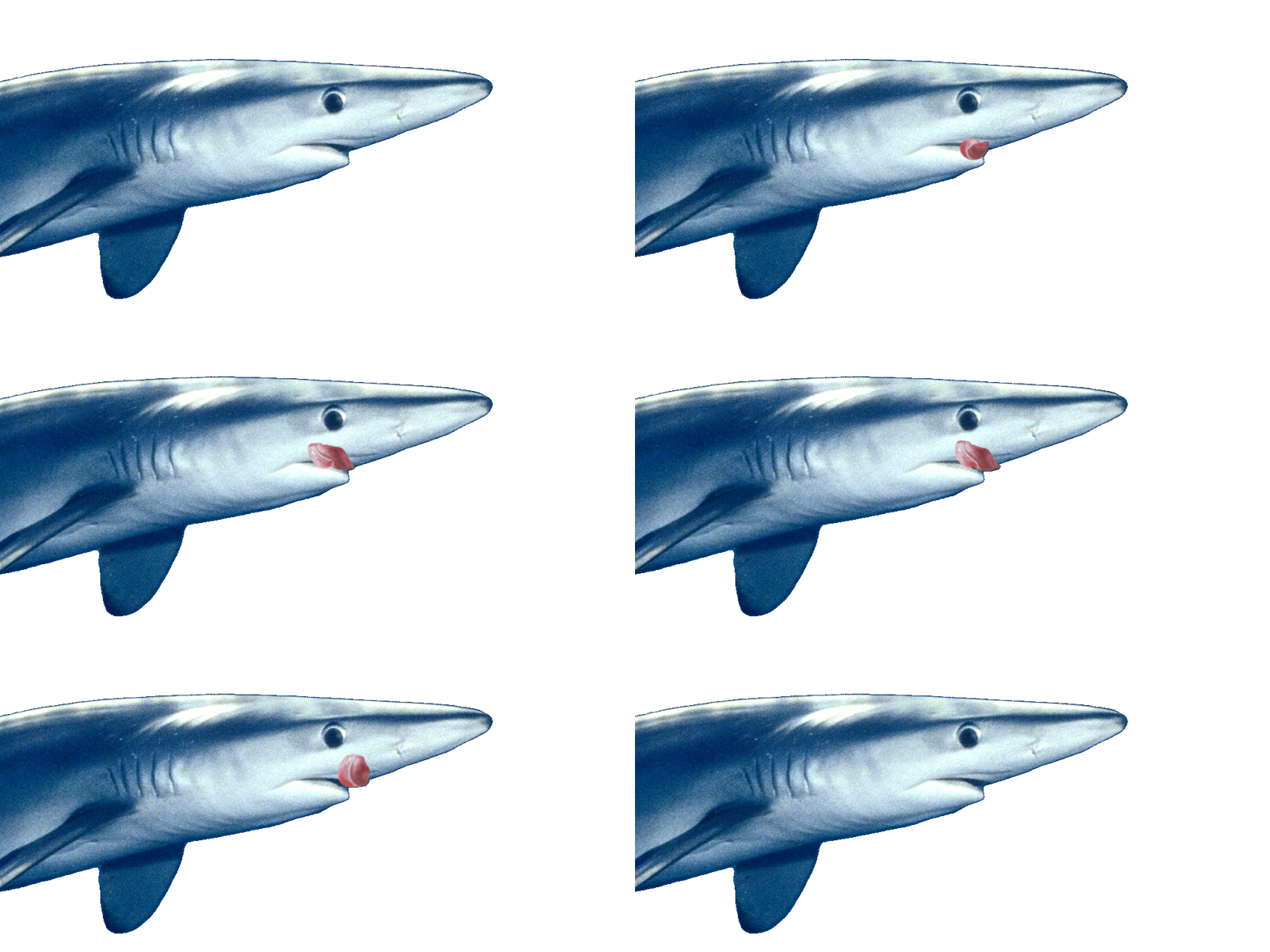
shark
Fall break, October 10. No class.
Sunday, October 20, Photoshop animation tutorial.

sleepingpuppy
12 frame Gif animation.
2015, 2016, 2016s,  2017, 2018, 2018s


ARTECHOUSE

Image result for artechouse

ARTECHOUSE (Art + Tech + House) is an interactive art space that first opened in Washington D.C. in 2017. This space features several month long exhibitions that bridge art, science, and technology to create one-of-a-kind multimedia experiences. The space has featured works by innovative artists from all over the world who use technology as their primary medium. Since its opening, ARTECHOUSE has expanded to open locations in Miami Beach, FL and New York City, NY.

Nell-Lynn Perera

So, I found this artist when scrolling through a list of “10 Outstanding Abstract Artists to Watch in 2018.” Her name was towards the bottom of the list, but I was remarkably drawn by her use of colors to make completely abstract images that also have very powerful feelings behind. I also found it interesting because many of her paintings and drawings she titles simply with adjectives like “stoic” or “beauty” or “anger,” which I thought related to our project at hand.

Perera was born in Malaysia and defines herself as a “world traveler.” On her website she is defined as a “pure-life force.” It goes further to explain:

She is best at understanding the human condition, the human spirit. Perera has travelled far and met many people in her life. She has befriended the infirmed. Learned from death row inmates. Collaborated with fine artists across the globe. She treats each one as an equal.

She claims to have been born different and more sensitive, which allows her to understand the human condition. I’m not sure I believe any of that jazz, but I think her work is really beautiful and easy to stare at.

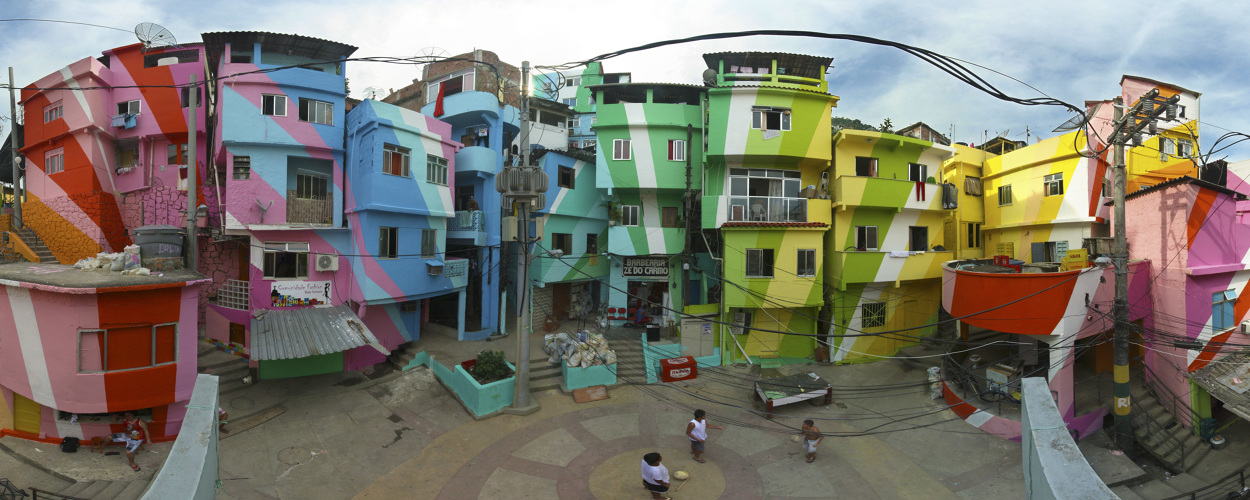
Favela Painting

Image result for Favela Painting

Favela Painting is a series of artwork in Rio de Janeiro, Brazil that aims to collaborate with local communities to create public artwork. The three-work series was lead by Dutch artists known as Haas&Hahn with help from the locals of the area. The project was first ideated when Jeroen Koolhaas and Dre Urhahn (Haas&Hahn) were struck by the poor living conditions of Favela and had a desire to transform the community and living environment through community-driven artwork. Eventually, Haas&Hahn envision coating the whole hillside of Favela in beautiful colors and artwork.

Grading Art and Design

leo-cullum-critics-in-love-new-yorker-cartoon

“I am interested in what is interesting,” Ed Ruscha, artist

How do you evaluate—grade?— art and design work?

The criteria and issues that stand out for me are:

1. skill to describe/articulate and frame a design question or problem verbally, visually or via some other form

2. participation in the studio and contribution to the studio culture

3. ability to transform ideas and rough concepts; to develop, refine, and successfully express or communicate

4. curiosity and willingness to experiment/explore/discover and to distill knowledge from this process

5. mastery of materials and craft in completing project (to the level required)

6. synthesis and aesthetics – create forms and relationships – to put things together with a level of completeness and in an engaging manner appropriate to the project

7.  production of a body of work that demonstrates your design process and  expresses what is interesting about the work by embedding meaning (your point of view, argument, interests, questions) in the work itself