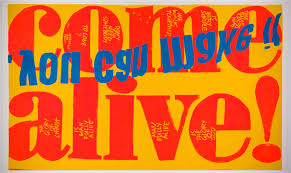
Corita Kent, also known as Sister Mary Corita, was a religious sister, educator, and artist with a unique approach to design and education. Corita’s work depicted her thoughts on poverty, racism, and war. She is mostly known for working mostly with silkscreen (serigraphy). At the sametime, her work was noticible because of how she pushed back the limitations of the two-dimensional medium by the development of innovative methods. Until now, her ideas on peace and social justice are still highly acclimed.
Stephen Powers was born and raised in Philadelphia, PA. He was known as ESPO because at the age of 16 (in 1984), he would write the name” ESPO” around his neighborhood. He was also part of the group of taggers that were asked by the Philadelphia Anti-Graffiti Network (PAGN) to sign a pledge promising not to vandalize property. He refused to sign it and eventually took “ESPO” around the world. Later, Powers decided to stop writing graffiti to pursue being a full-time artist and moved to New York City. He was part of the 50+ mural project called Love Letters in Philadelphia, PA. He’s known for his typography use and colorful style.
I know we aren’t working with color but I thought the discussion of what our work would look like if the black and white pieces were switched. I found myself wondering the same thing about everyone’s work and it is interesting how something so small and simple can change the entire work so drastically, giving it an entire different energy.
Mural in Manizales, Colombia by artist Sepc
This idea got me thinking about elementary school when everyone thought it was so cool to invert the colors on their computers, and how off putting that looked. This is the work of an artist known as Sepc, who is based in Colombia. They have been sprinkling the streets with these murals of inverted color. Only when a viewer takes a snapshot and flips the colors in the digital image using their photo editing software of choice will the “normal” or “positive” colors be revealed. The fact that his works are eye grabbing on their own, but also require a multimedia approach in order to be fully experienced is very compelling.
“I want the viewer to capture the photograph and ‘reveal’ the image, get another kind of experience with urban art and in some way join it to the digital age and take advantage of it to create related fields between technology and other areas. I want the viewer to capture the photograph and ‘reveal’ the image, get another kind of experience with urban art ”
During the art critique, I noticed several pieces displayed a sort of “tunnel” pattern, and many others contained repeated elements that formed a larger picture.
Fractal art is a kind of digital/computer art generated by an algorithm through software like Apophysis, and frequently contains a kind of “basis” that is then reiterated and warped repeatedly. The Mandelbrot set is a frequently cited staple of what fractal art can look like. Fractal art can also branch into the 3D realm. A field of new media art, it has garnered attention from the public, art critics, and mathematicians alike.
Wabi Sabi is a Japanese aesthetic and lifestyle that focuses on appreciating things that are transient and imperfect. The concept draws from Buddhism’s Three Marks of Existence, namely impermanence (annica), suffering (dukkha), and non-self (annata).
I first came across the concept of Wabi Sabi in a group chat with my roommates, one of which had taken a screenshot of a text her dad sent her. The text was a quote from Leonard Koren, an American artist, aesthetics expert, and writer of a book about Wabi Wabi aesthetics. The quote reads as follows:
Get rid of all that is unnecessary. Wabi-sabi means treading lightly on the planet and knowing how to appreciate whatever is encountered, no matter how trifling, whenever it is encountered. […] In other words, wabi-sabi tells us to stop our preoccupation with success–wealth, status, power, and luxury–and enjoy the unencumbered life. Obviously, leading the simple wabi-sabi life requires some effort and will and also some tough decisions. Wabi-sabi acknowledges that just as it is important to know when to make choices, it is also important to know when not to make choices: to let things be. Even at the most austere level of material existence, we still live in a world of things. Wabi-sabi is exactly about the delicate balance between the pleasure we get from things and the pleasure we get from freedom of things.”
Leonard Koren
In this quote, Koren relates Wabi Sabi back to a way of life, instructing everyone to let go of success and focus on balancing the things we have and the things we do not, while also finding beauty in that which is flawed and broken. But I digress, this quote is less important for our class and more important for my general consciousness, so I will move on.
In terms of design, Wabi Sabi finds a focus in “asymmetry, roughness, simplicity, economy, austerity, modesty, intimacy, and appreciation of the ingenuous integrity of natural objects and processes,” as according to the Wikipedia page.
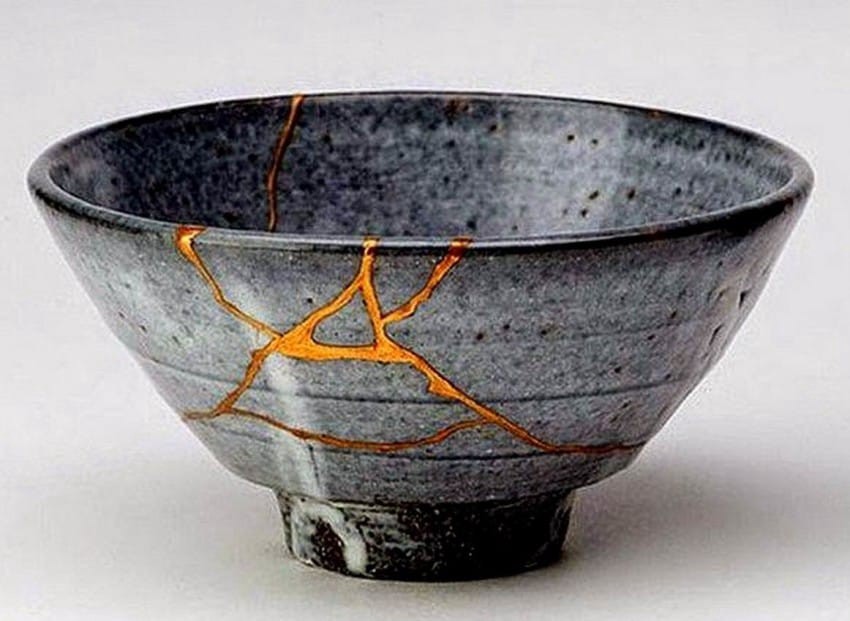
I chose to start with the bowl above to relate the philosophy of Wabi Sabi to physical objects. The image shows that the bowl shattered before being put back together with what looks like gold glue. This image perfectly demonstrates how the break in the bowl is actually what makes the bowl visually appealing. The life this bowl has lived, a life which eventually broke it, is apparent because of the gold glue used to revive it and that is what makes it beautiful.
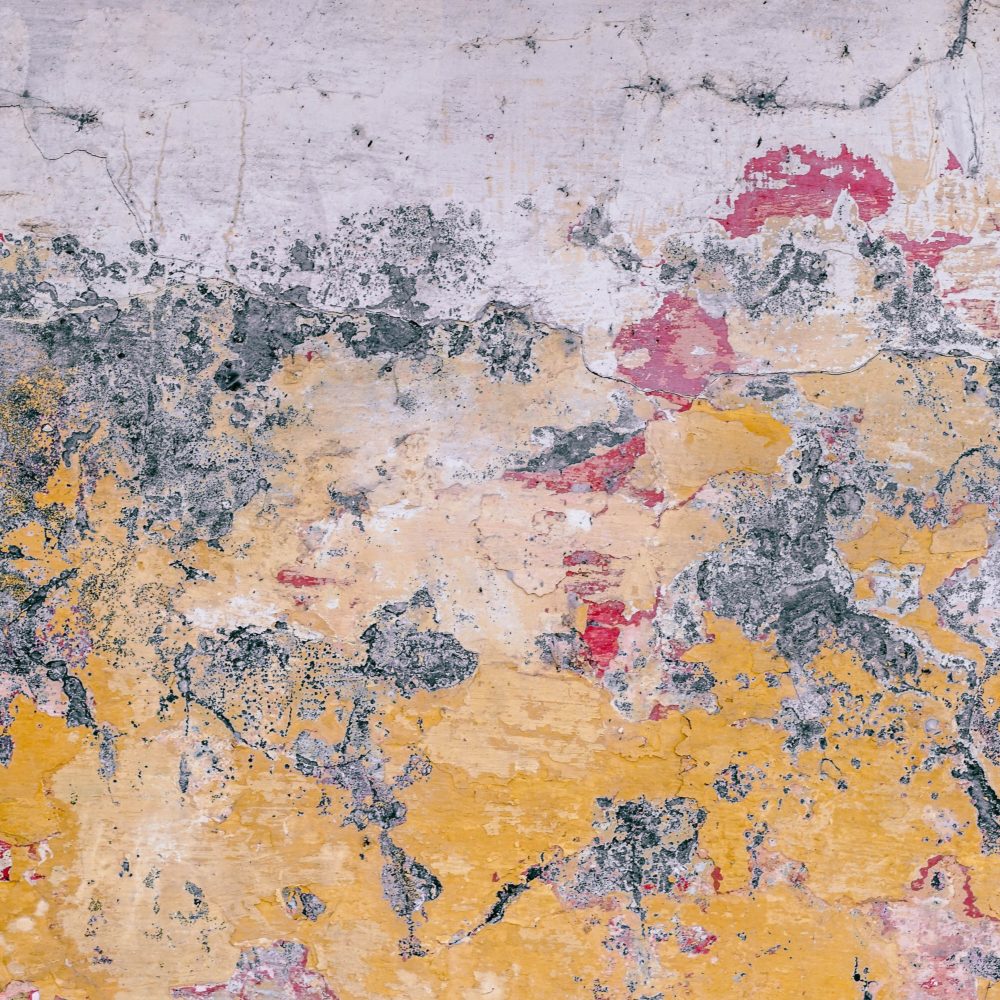
Above are three images, all of which are are dirty or broken, mundane or insignificant, and yet all three are beautiful. They are examples of the Wabi Sabi concept present in photography.
Above are two more examples of Wabi Sabi interior design and architecture. In the first, the exposed concrete wall, which is decomposing, broken, and almost archaic looking, accentuates the minimalistic design of the apartment and actually ties together room. Somehow, in that image, a piece of wall that people would normally take extreme measures to cover-up has been repurposed to look modern and edgy. In the image below, the design is similarly minimalistic, using predominately neutral colors and organic shapes.
Wabi Sabi is particularly interesting because in understanding the philosophy behind the phrase, the different images I used throughout this blog post actually all make a lot of sense together.
4-koma is a style of comic originating in Japan. It’s called such because the layout consists of 4 equal sized panels. Originally, they were used for gag/comedy comic strips, although now there are more slice-of-life genre comics being done in this style.
As stolen from Wikipedia:
Traditionally, yonkoma follow a structure known as kishōtenketsu. This word is a compound formed from the following Japanese kanji characters:
Ki (起): The first panel forms the basis of the story; it sets the scene.
Shō (承): The second panel develops upon the foundation of the story laid down in the first panel.
Ten (転): The third panel is the climax, in which an unforeseen development occurs.
Ketsu (結): The fourth panel is the conclusion, in which the effects of the third panel are seen.
Azumanga Daioh by Kihohiko Azuma
The layout of our instruction guide project is also a 4-koma!
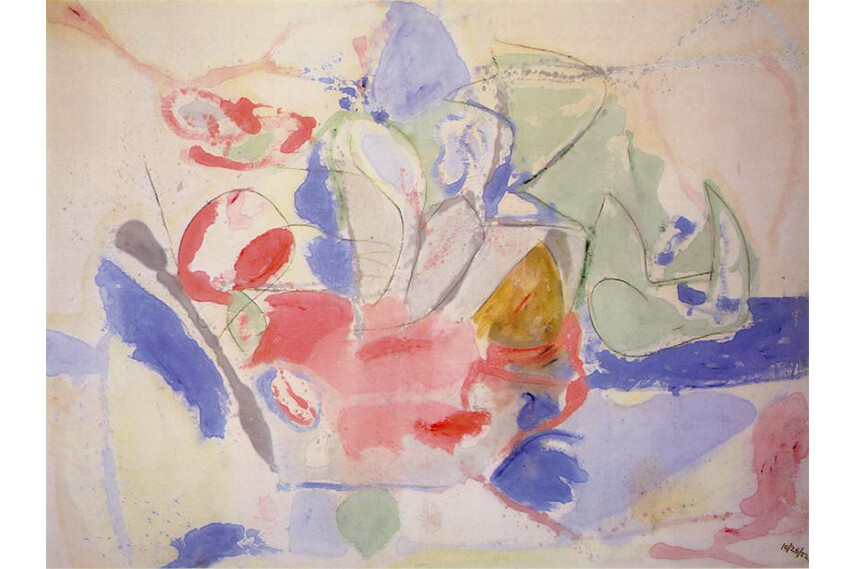
Helen Frankenthaler was an abstract painter that played a major role in The Color Field Movement of the 1950s. This abstract painting style explored colored, flat spaces independently from the traditional constraints of image making (such as line, subject, form, etc). Frankenthaler created her most influential work in 1952, entitled Mountains and Sea (pictured above). Part of the success of this painting was the invention of a new technique called the “soak-stain process.” In this process, Frankenthaler used turpentine to thin her paints and poured them onto a blank canvas. She then allowed them to soak completely into the surface, giving her paintings a unique style and texture.
Frankenthaler drew inspiration for this method from Jackson Pollock, who also laid his canvases on the floor, but poured thick enamel paint onto them instead. Frankenthaler also decided to use an unprimed canvas which allowed the paint to soak completely into the material rather than accumulating on the surface.
The soak-stain process became an integral part of the Color Field Movement and was adopted by other abstract artists of the time.
Joan Miro was a Spanish painter and sculptor from Barcelona. A quote from him is “I try to apply colors like words that shape poems, like notes that shape music.” This is interesting because it tells a bit about the intention behind his work.
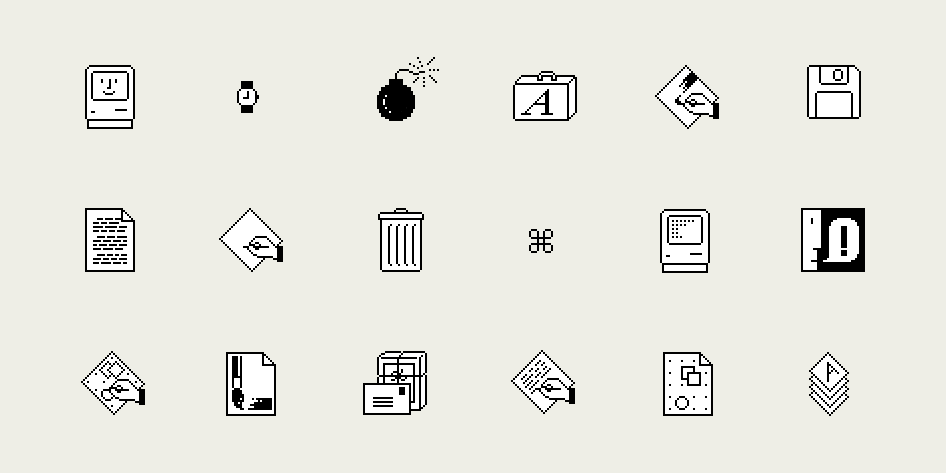
Susan Kare is an artist/graphic designer who created many of the icons that are universally recognized today in every photo editing or drawing software (paint bucket, lasso, and the grabber to name a few). These images are key in the communication between the user and the computer, and the design process requires minimizing and simplifying information.
Before getting her job at Apple, Kare had experience in various forms of “pseudo digital art” like mosaics or needlepoint, which could roughly be translated to bitmap. Some of the inspiration behind her iconography such as the “command” key on a Mac was taken from the Swedish symbol meaning “something interesting.” An old “Copy File” icon underwent numerous changes from the symbol of a copier to the image of a cat in a mirror representing “copy cat.” Additional challenges were present in abstract ideas like “undo.”
She worked for Macintosh extensively as well as Microsoft, IBM, and Facebook.
When symbols are meaningful and well crafted, they need not be frequently redesigned.
Susan Kare
She is currently using Photoshop and Illustrator for her designs.
Paula Scher has been deemed one of the most influential graphic designers in the world. Described as a “master conjurer of the instantly familiar,” she works with pop culture, typography, and fine art. She was the first female principal at Pentagram, a famous design firm.
I chose her because I wanted to look at different and interesting approaches to typography, and more specifically, a woman working in the field. I found her book of maps particularly interesting and visually stimulating (shown below).
I think the use of white space, juxtaposed with the very busy map of the USA, works remarkably well. Here is another example of her work, not in the map series, but in a book titled: Make It Bigger
She teaches at the School of Visual Arts in New York City and has won over 300 awards from international design associations as well as a series of prizes from the American Institute of Graphic Design (AIGA), The Type Directors Club (NY), New York Art Directors Club and the Package Design Council.
Public Theater poster
She was also the first to designer to create an identity and familiar look for New York public theater, creating posters with energy and new uses of typography. Her goal was to promote attendance and awareness at the Public Theater, as well as bring in diverse groups of people. One of her posters is shown above.










 Foundations of Art, Design, + Digital Culture