
Aaron De La Cruz

Satoshi Kon is a director of animated films. Some titles he has directed are Perfect Blue, Paranoia Agent, and Paprika. One thing he is knows for is his use of transitions as seen here:
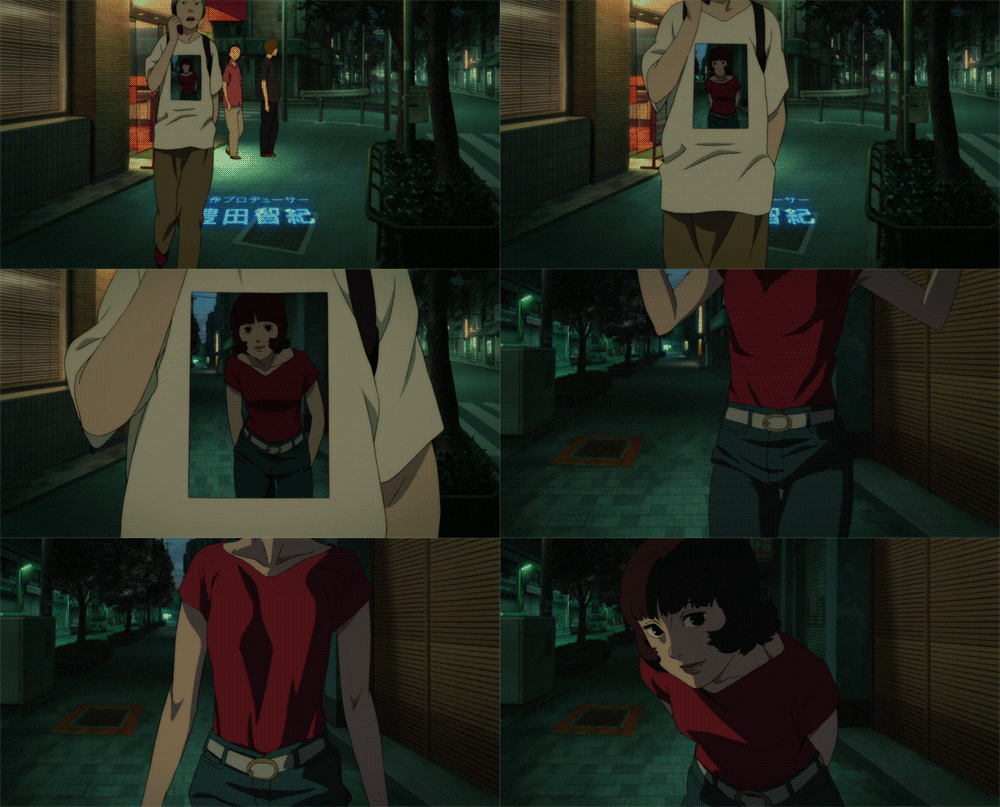
Here’s a link to a youtube video that highlights more of his use of transitions: https://www.youtube.com/watch?v=oz49vQwSoTE
Ben Ridgway refers to his mathematic patterned and precise work as “Inner Space Art.” Though most of his animations are abstract, there is often some basis in reality. For example, in his animation “Cosmic Flower Unfolding,” the figures represented are not necessarily flowers as we imagine on Earth, but do evoke a sense of plant-like growth, making it a successful piece of abstract art. More of Ridgway’s work can be found on his Vimeo here.
Francis Picabia is another Dada artist who contributed to many different art movements throughout his life. You can see here the great variety in his style and how he contributed to impressionism, cubism, and dadaism. His work has been shown in many museums throughout the world such as MoMA and the Tate.


Man Ray is a visual artist who spent most of his life in Paris and contributed to the Dada and surrealist movements. He has produced art in a variety of media, but considers himself to be a painter foremost. Some of his photography and paintings are shown below.


Bancroft is an animator who has worked on many projects such as Mulan and The Lion King. It is interesting how in this gif you can clearly see the steps on the animation and the process behind getting the animation to look as if it is moving in one sweeping motion. There are many character designs such as this one from Bancroft and it is cool to see how the different stages of the animation come together to form a video.


Paul Klee (1879-1940) was a German artist whose works exhibited traits of surrealism, cubism, and expressionism. Throughout his life, Klee made multiple publications regarding the study of color and form (Writings on Form and Design Theory/Paul Klee Notebooks), and taught at Bauhaus School of Art, Design, and Architecture.
In Klee’s younger years, his parents encouraged him to pursue music professionally, but the option did not appeal to him, as he was not able to find a meaningful outlet for creative self-expression and introducing radical ideas, as he felt “modern music lacked meaning” for him. By the time Klee was a young adult, he was already skilled in drafting and had a knack for drawing caricatures. His parents reluctantly allowed him to start studying at the Academy of Fine Arts in Munich. He excelled in drawing, but recounted experiencing struggle in color-sense, and felt that perhaps he would never successfully learn how to paint.
After graduation, Klee gained a few trustworthy and loyal collectors of his work, and began to study other artists based on their use of color. Klee, upon seeing Vincent Van Gogh’s work, said, “Permit me to be scared stiff.” He would later say that Van Gogh allowed him to see color as an expression of emotion.
A visit to Tunisia in 1914 changed Klee’s art direction and compelled him to begin experimenting with color as a separate entity from the subject of which they are part of. He noted that he was impressed by the quality of light there, and remaining faithful to a model was no longer important.
Colour has taken possession of me; no longer do I have to chase after it, I know that it has hold of me forever. Colour and I are one. I am a painter.
– Paul Klee

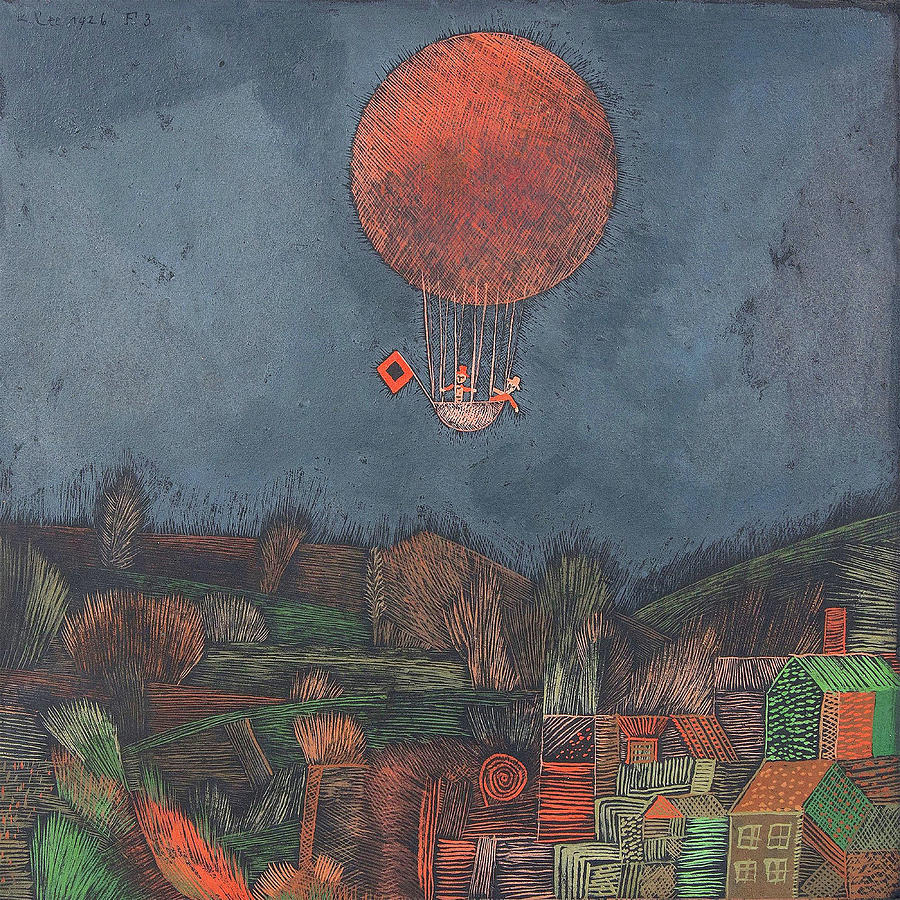
His later works became increasingly somber, a reflection of the political turmoil in Europe throughout the two World Wars. One of his last paintings, Death and Fire, was created when Klee was struggling with several painful illnesses.


I cannot be grasped in the here and now, For my dwelling place is as much among the dead, As the yet unborn, Slightly closer to the heart of creation than usual, But still not close enough.
– Paul Klee’s Epitaph
There are many ways to make or find audio for your animation. You can record with your phone or other recording device, download music and sound effects from the Internet and extract audio from videos using an MP3 converter.
I highly recommend that you use copyright free material to avoid having your work blocked once it is hosted on the web. The Free Music Archive is a great source.
Test your animation by exporting to video and preview (see below).
To insert audio in your timeline, click the music note icon next to “Add Track” and add your MP3 file. Click the icon to add “new audio track” too.
To export your video, go to “File” –> “Export” –> “Render Video…” with the following setting (title it FirstName_LastName_Sample.mp4):
Credit your animation with this or something similar:
Produced by ____
Foundations of Art Design and Digital Culture
Penn Fine Arts
2019
Design of credits and audio on theses project work well with animation:

For final submission (before October 29 screening) post your rendered video (MP4) to the Project 2 – final animations folder on the Course Folder.
Resources for working with audio:
UbuWeb Sound (spoken word audios)
Convert Youtube to MP3 (audio) files (might have some ads – make sure you close spam tabs or have ad block on)
Epidemic sound (for 99 cents per sound)
You can use Adobe Audition to edit audio then bring it into the Photoshop Timeline.
In Audition, highlight the section you want, right click and select Copy to New, then save that and import it into Photoshop.
Here is a tutorial on how to work with audio in Photoshop
Adding Sound to the Video Timeline
https://www.youtube.com/watch?v=rTwL54u7cSw (a link to Ghosts Before Breakfast)
Although most of the Dadaist works shown in class are still images or possibly GIFs, the Dada movement encompassed a vast range of media, from sound media to movies. One such film was Ghosts Before Breakfast, released in 1928 in Germany. Directed by avant-gardist Hans Richter, the sound is minimalist and disorienting, and the storyline and visuals are seemingly incoherent. Nonetheless, I found it very curious and even unsettling. Although not an extraordinarily well known film, it seemed highly relevant to our work in class.
In February of 2013, Alex Chung and Jace Cooke founded Giphy, the largest American database of short looping videos. Interestingly enough, although the art found on Giphy resembles GIF animations, technically they do not have to be. The two hoped to create a better way to communicate with solely visual media, and they certainly have. With over 200 million daily active users, Giphy is a widespread and powerful database.


 Foundations of Art, Design, + Digital Culture