
Project 4: Public Intervention
What happens when you express something unexpected in a public space?
In this project you’ll collaborate in small groups* to create an intervention in a specific public space with the intent of initiating a dialog among those who use the space. The visual forms you employ should be derived from research about your issue and direct observation of your site/venue. Construct the work so that when installed it provokes a response in the viewer, creating questions or thoughts, re-examination of assumptions. Medium is open. Video documentation required.
Each group will develop a project plan, create a story board/visual design specifying site and materials required by Nov 14. Present concept boards for final class review (December 3 or before), and produce video documentation of the installation (to present at final review, December 19).
* Randomly organized groups:
- Group 1: Evan, Erin, Ruth
- Group 2: Elizabeth, Anjali, John
- Group 3: Marlies, Mia, Jhorcy
- Group 4: Di, Lindsay, Hannah
- Group 5: Isak, Lyrica, Tessa, Siani
Schedule:
Nov 21 Proj 3 studio
Nov 26 Proj 3 final – photo documentation and summary page
Nov 28 No class
Dec 3 Proj 4 studio; readings; video tutorial/exercise w/Premiere
Dec 5 Proj 4 studio; portfolios; last class
Dec 19 Final crit 3-5p (screen videos), upload portfolios, party
Edit your Proposal: Project 4 Proposals 2019
Project description and proposal form
Readings for Tuesday, December 3 (discussion leaders: Hannah, Tessa, Lyrica):
Good Citizenship, McCoy
The Casual Passerby
Critical Design FAQ, Dunne and Raby
Post-election Pain is Good for Art
Art/design intervention, Wikipedia


Above: Zombie demonstration at G20 in Hamburg, top, and action at the G7 Summit in Germany by the group ONE to draw attention to its issues.
My colleague Tom Starr’s recent project identifying ‘historical’ climate change consequences in the ‘future’.
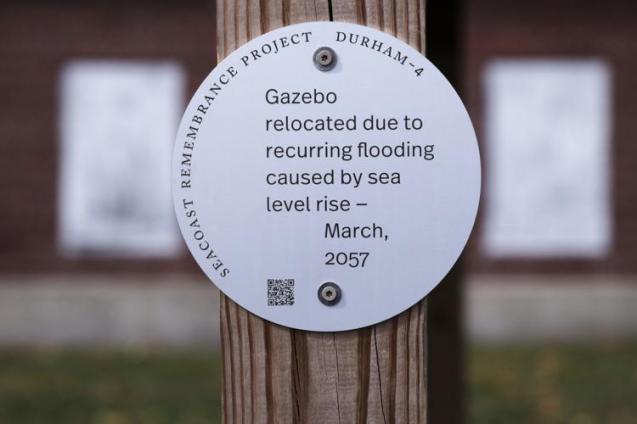
More here.

Climate denial intervention at Metropolitan Museum of Art by art critic Jerry Saltz.
Below: Shakiel Greely’s Trail of Silence intervention/performance, October, 2014.


This project is ongoing – the sites are here and here.

Article about Casual Passerby project in DP.

Additional Resources:
BroLab
Class Action
Public Opinion, spring 2014, Annie & Manon
Sagmeister on Good in design
Michael Rock on Designer’s Responsibility (from 90s)
Heller and Milton Glaser excerpts on responsibility
r-word, Comberg
Class Action project list
Class Action Interview: The Bodies-Politics
Class Action Aspen logo


Selected project videos:
Constructed Interactions, 2018
On the Semiotics of Canada Goose, 2018
#STOPSUCKING, 2018

We Are for Each Other, Kate Jeon, 2017
Project 4 documentation Fall 2018
Project 4 documentation, Spring 2018
Project 4 documentation, Fall 2017
Project 4 documentation, Fall 2015
Fall 2017 project documentation
Sample concept boards, title, site, issue, strategy:


DP article on Women in Engineering intervention, 2014

First Things First Manifesto, 2000
Divergent Thinking
Class Action Project Checklist

Detournement: hijacking an existing work (image, etc.) to criticize or oppose the original, like above.


Adam Cole. (label at top reads):
This is an acclaimed author.
Sponsored by the University of Pennsylvania’s English Department and the Fine Arts Department

Maria Nascimento: LOVE!
In this project I intended to provoke people by adding the exclamation mark, implying energy, emotion, and excitement, in the well known “Love” sculpture. I wanted to turn the passive form into active advice. Because just love is not enough!

Krzysztof Wodiczko’s projected interventions:


Stephen Powers, above and Banksy, below


David Comberg and Hank Essex
The Participant (Behavior and Expression)
For this project I collaborated with Hank Essex, who regularly sets up his large didactic texts on the corner of 36th and Walnut Street. My interest in his installations grows from their public nature, political expression, and graphic form.
Hank and I discussed the authority a government should have to dictate to its citizens regarding what they may or may not listen to, read, or watch.
I asked Hank to produce a statement addressing the limits and protections afforded art (as free speech) according to the Constitution.
This photograph is documentation of the installation on August 16, 2016.
 Foundations of Art, Design, + Digital Culture